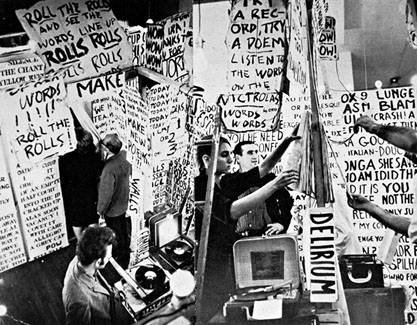
While reading Art in the Age of Digital Distribution, one of the artists who I became interested in researching was Allan Kaprow. Known for his revolutionizing contributions to art in the 1960s, Kaprow is especially remembered for his “happenings”. His works go beyond the traditional canvas work and focus greatly on movement itself, asking for the audience’s participation. One of his works in particular, Words, greatly relied on involvement from the audience. Displayed at the Smolin Gallery in New York, this work guides the audience through two rooms and invites them to interact with the multitude of news papers, graffiti art, over heard conversations, and billboards, creating a multi-sensory experience. Moreover, Words is a great contribution to the growth of new media art as well as performance art because of its use of technology, such as incorporating sounds, to engage the audience into an experience that allows them to participate and interact with the entire work. Moving from passive reactions to art to more interactive participation is an aspect of the New Media art movement that Kaprow embellishes.
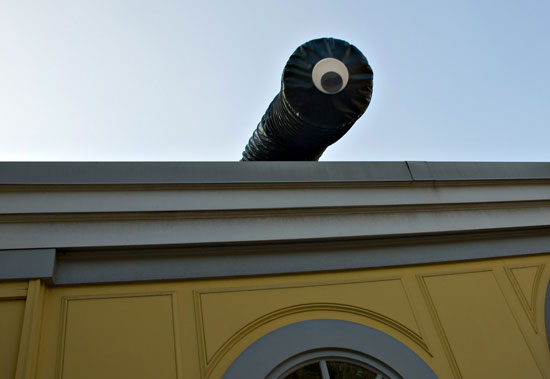
Another artist I researched was Golan Levin, who, like Kaprow, uses performance media as a way to interact his audience with his work. Additionally, the work Levin brings to his audience a way in which they can interact and communicate with others and machines with the use of various software programs to create unique audio and video experiences. His latest piece titled, Double-Taker (Snout), involves several characteristics of New Media art including surveillance, choreography, and eye contact. Perched on a low roof of a museum, a long industrial robotic arm controlled by a “real-time machine vision algorithm” takes after a worm or elephant’s trunk in its black garb. This “snout” is programmed to make double-takes at passersby, making the sculpture seem inquisitive and surprised by the visitor’s presence. Double-Taker (Snout) is an excellent example of New Media art as Levin constructs an interactive experience for his audience through technology. His use of performance art as well as computer engineering in this particular work helps depict his message of the uniqueness of each individual.
Sources:
http://www.theartstory.org/artist-kaprow-allan.htm
Bridget Miller
bmille39@uic.edu
bmille39@uic.edu